
The Problem of Screen Time
I was hoping to avoid this one...

Screen time is not something I am excited to write about. Why? There is already plenty of research on screen time, especially from the point of view of psychologists, and I can’t look at it anymore. We’re Covid survivor parents. We don’t need reminders of unfortunate correlations with screen use (just correlations, by the way) after surviving with screens the way many of us needed to and still do.
I struggle every day with the use of screens in our lives, whether it’s my own scrolling habit or the perpetual management of the kids’ use of screens. Is it a stretch to say that every day involves some battle with screens? According to Screen Sanity, an international non-profit that helps parents navigate this very feeling, I’m not alone in feeling this way. Screen usage is a major bone of contention in many families.
What is often missing from accounts of screen usage in public discourse is the social context in which we need to understand all social phenomena that impact parenting (e.g. lengths of commutes or access to food or the rising cost of rent)—phenomena that are experienced differently across class and family composition and other factors. Knowing this, though, only mildly dampens the flicker between guilt and relief that follows the ta-dummm of the Netflix logo on a Friday night. And Saturday morning. And Sunday afternoon.
This morning, I was scrolling under the covers, listening to my kids probably spill cereal, when the face of Dr. Gabor Maté proclaimed that if he had kids today, he wouldn’t let them near screens for years. I love a lot of Maté’s work but this comment was uncharacteristically devoid of social context. Also, I felt scared by whatever he was alluding to about brain scans and screens and kids. Then ashamed. Now a little angry, and still a bit scared. And guilty because maybe I should be pouring their cereal? Parent feelings!
Many Parent Feelings Project interviewees and survey respondents also confessed feelings around the subject. How can we make sense of these feelings when warnings and rules around screen time emerge in our own scrolling and social conversations and, ahem, family arguments?
As these very letters light up on the screen in front of me, and I recognize that they only reach your eyes and feelings through this glowy mediator, I offer solidarity. Here’s a little summary of how some of us are feeling about living such technologically-integrated lives—particularly when it comes to raising kids—as we head into a weekend of what I hope will involve Elf and a mug of hot chocolate.
When surveyed…
Ten percent of respondents were single (either never married, separated/divorced or widowed). As this first-person account illustrates, if anyone might need to strategically rely on screens, it’s a single parent! When speaking with single parents in interviews, they also raised the importance of tech tools for staying connected to adult community in the context of their disproportionate time spent parenting.
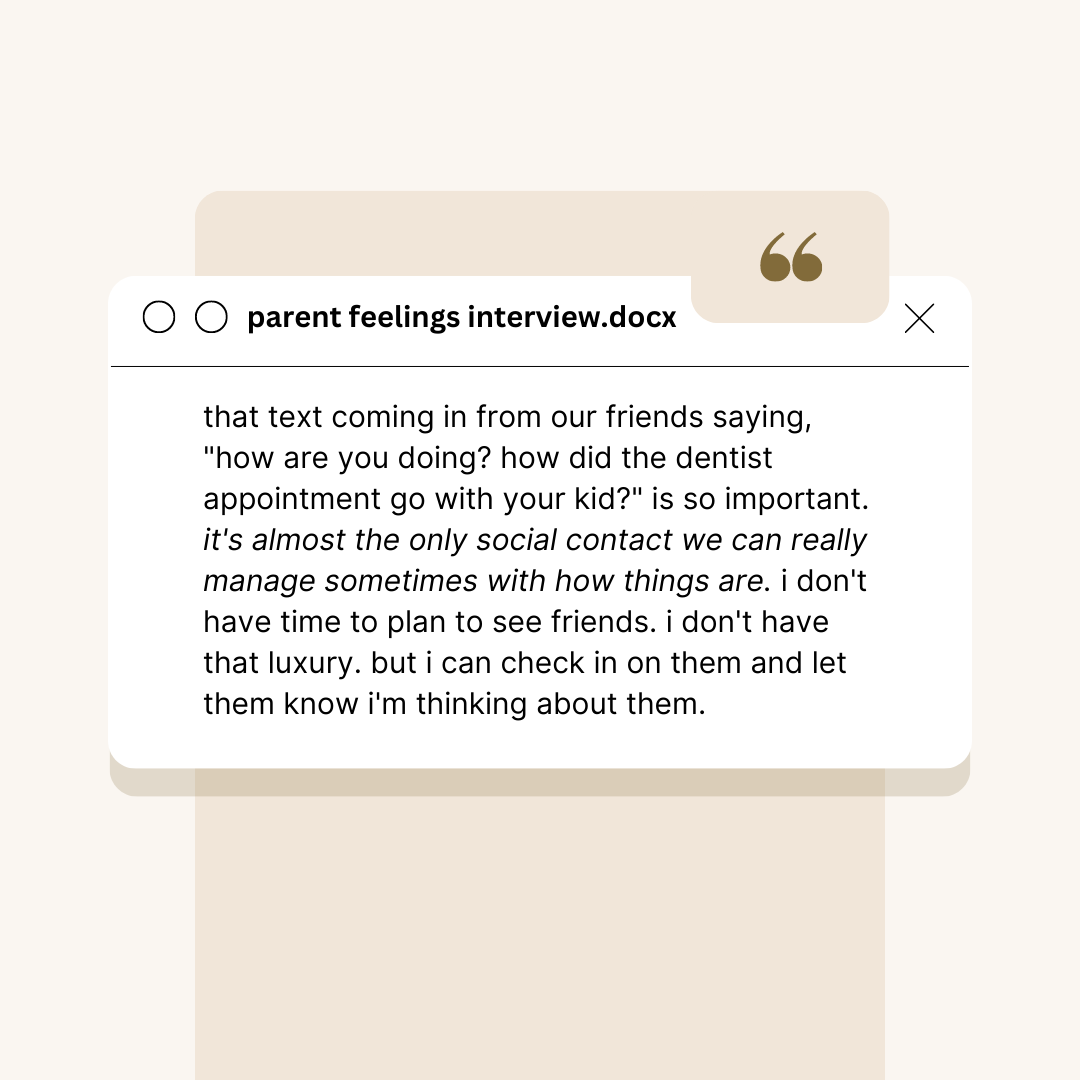
Parenting today involves dealing with screen usage on a personal level and wondering how to coach our kids through the same challenge:
From time to time I just go through and delete things off my social media, or I try to put limits on my phone or just try to disconnect. But it's hard because you want to stay connected to friends, then, and that sense of community and we've moved so much of that to remote rather than face-to-face.
These communication devices are also tools that function for different families, as one single parent put it:
This is a case for a lot of [single parents] who co-parent: they want their child to have a phone at a young age, so they can keep tabs on them or for them to contact you.
Parents also reference different kid neurological needs in the way they interact with screens. You can hear in this parent’s voice that they are well aware of parenting advice as they navigate the issue of bedtime.
So we've got three different ways that we do screen time. One of my kids might have… some attention stuff going on. And regular bedtime routines were just amping her up. So, you know, [advice is] like, oh, you should do quiet time. We'll try doing quiet time. When quiet time was inviting rebellion. We're in a situation where we kind of had to... It's tough because we have one who's like… so we basically do a wind down, wind-down screen time with something very boring, like Bluey, that happens since about like, I think maybe like half an hour before they go to bed. If they're getting any bonus kind of screen times, we have like a Nintendo Switch that has a watch… We use it as kind of like a reward system. And so it's kind of like, you know, okay, here's your time with it. It has a timer.
Parents who were surveyed for this project whose kids were a little older (9-10) had more to say about fears around social media safety and mental health, as screen use migrated from streaming Gaby’s Dollhouse to communicating with friends and consuming images that are linked to negative mental health consequences, particularly for girls. More on this in a future issue.
Making Sense of Screen Feelings
As with any ethical dilemma in parenting, we might feel pulled between what we feel we ought to do and what we are doing. Digital health is one more public health challenge that parents are tasked with navigating when they did not create the ubiquity of tech and the allure of notifications, nor should they be held individually responsible for cultivating the health and safety and flourishing of a generation.
How can we receive information about how to help our kids navigate their mental health (which may well involve restricting screen time) while not judging our kids’ needs and desires, our own needs and desires, and the desires and practices of others?
A constant work in progress over here—one that feels similar to navigating feelings around how and when to talk to kids about hard things, or how to build community among parents who do things differently, or when and how to be the advocate and when to listen. Feelings of relief and, maybe, superiority rise when I find out other homes are setting less strict boundaries around screens. Feelings of shame equally rise when someone else appears to be doing it better, maybe with more willpower, or more love, or because they are just a better person and more worthy of the good things in life! Letting both sets of feelings bubble up and trickle away are key to empathising and connecting with other families for much needed solidarity through the struggle.
The following words on screen time are closing out my week. They’re welcome in part because they apply beyond the topic at hand. If it is a 10-hour screen day for your house and that is survival, you can pretend this passage is about recycling or getting more movement into our lives or whatever dilemma we face as parents today. Here is Anglican priest Tish Harrison Warner’s final interview question for Krista Boan, co-founder of Screen Sanity.
THW: One reason we let our children go to screens is parental exhaustion. I see this with my kids. I get tired and give them screens so I can have a break.
KB: Give yourself grace. Today’s parents are exhausted from trying to juggle so many things, and sometimes a little screen time can be a lifesaver. This isn’t about perfect parenting — it’s about finding ways to use screens to support the things that matter most to you. So try to release the pressure to find a magical number of screen time minutes and instead start to think of childhood as an opportunity to grow the muscles and habits they will need to have healthy tech use for the rest of their lives. When your kids’ screen time feels out of sync, don’t feel like you need to throw all of your screens in a lake. Give yourself as many do-overs as you need. Ultimately, little steps in the right direction really add up. Even small steps are big steps when it comes to digital health.
The Parent Feelings Project Newsletter is here to provide brief updates on research findings to our participants as well as links to resources that might be relevant to this community. Findings will also be posted on the research website. https://parentfeelings.wordpress.com/survey-preliminary-findings/